
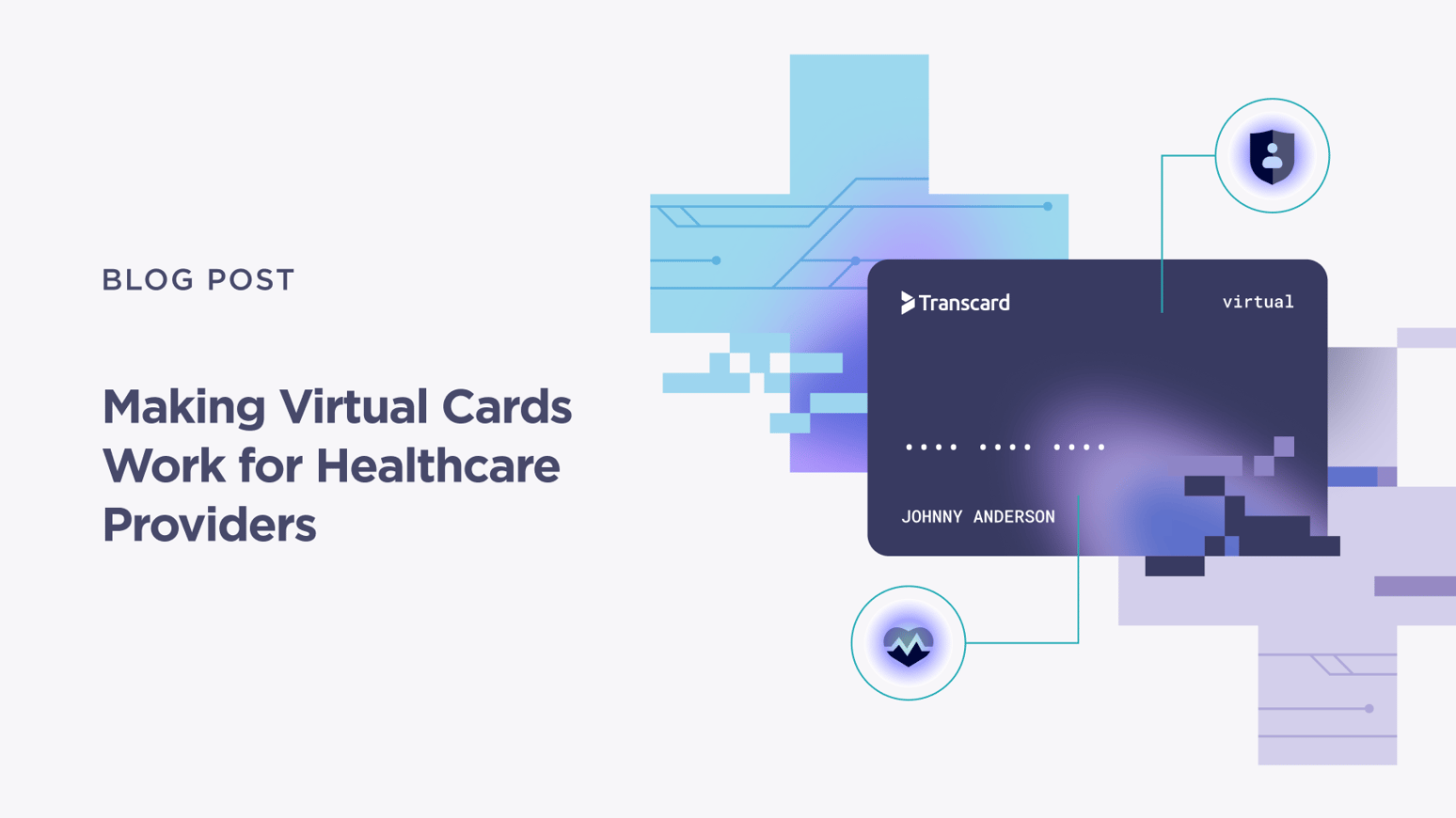
Healthcare providers process hundreds of insurer payments every day. Many of these payments arrive as virtual card accounts delivered in printed or faxed format due to HIPAA privacy. In fact, J.P. Morgan’s 2024 Trends in Healthcare Payments reports that 45 percent of surveyed providers receive virtual cards from insurers, while 39 percent of payers say they issue them. The difference reflects the scale of payer networks, where a single payer can reach many providers, but together the numbers show that virtual card payments are prevalent.
Once a printed or faxed virtual card is received, the provider’s staff will manually enter each number into their system, a time-consuming process that is truly deserving of automation. Instead of focusing on higher-value work, billing teams get tied up with low-priority manual posting tasks, opening the door to errors, delays, and added cost.
What is a virtual card account?
A virtual card account is a randomly generated 16-digit debit card number linked to an existing credit or funding account. It works like a physical card for payments but exists only in digital form.
Virtual cards are used across many industries to provide secure, trackable payments. In healthcare, they give payers and providers more control over payment timing, security, and reconciliation compared to traditional methods like checks, which are slower and more prone to error. The virtual cards market is projected to reach 14.32 trillion dollars by 2030 at 21 percent compound annual growth (CAGR), according to Mordor Intelligence.
How are virtual cards used between payers and providers?
Virtual cards are used between payers and providers to pay a healthcare provider for an approved medical claim. Providers process the number like a manual debit card transaction by keying in the card number, expiration date and CVV code. A merchant card processor enables the funds to settle into the provider’s preferred bank account.
Before processing the virtual card payment, providers rely on contextual reconciliation information to confirm where to apply the payment. Medical claim identifiers, patient identifiers and date of service are examples of data that providers need in order to confirm the balance owed in context with the payment received.
What is Straight-Through Processing of virtual cards?
Straight-Through Processing or STP is an automated process that eliminates the manual effort associated with entering virtual debit card payment data into a point-of-sale system. Issued virtual card payments are automatically routed through a card network and presented to the provider’s merchant card processing vendor. The card processing vendor processes the card payment and settles the funds into the provider’s designated bank account.
Information related to the settlement, together with reconciliation data enables the provider to more efficiently close patient records in their patient accounting platform.
What is a medical claim?
A medical claim is a request for reimbursement that a healthcare provider sends to the insurance company providing coverage for a patient, after care is delivered. It includes details about the services performed, the codes used, and the requested amount of payment for each service performed.
Once a medical claim is adjudicated by the insurer and approved for payment to the provider a predetermined method of payment is leveraged, for the reimbursement.
What is a healthcare provider reimbursement?
A healthcare provider reimbursement is the payment a provider receives from an insurer or other payer for services rendered to an insured patient. Reimbursements can be delivered through several methods, including checks, ACH transfers, or virtual cards.
When delivered electronically, virtual cards unlock the advantages they were designed to provide. They connect payment processes more directly to financial systems, helping providers move past paper-based bottlenecks.
Benefits of electronic virtual cards for healthcare providers:
• Faster settlements
• Fewer posting inaccuracies
• Lower administrative costs
• Greater payment traceability
Limitations of virtual cards for healthcare providers:
• Extra data entry time and effort when cards are printed or faxed
• Merchant processing fees
• Delivery delays from fax or mail
Many of these limitations are tied to processes, not the technology itself. By increasing adoption of electronic processing, providers can handle more payments and bypass slow, paper-based workflows that still dominate much of the industry today.
Automation turns virtual cards from a manual posting task into part of a connected digital payment process. With Transcard, payments are delivered electronically and include the documentation needed for accurate posting. Each transaction carries the claim-level detail providers need to reconcile payments confidently within their own systems, reducing the time, cost, and manual effort typically required. According to the 2025 Visa report, “Untangling the Complexity of Payments in Healthcare,” it can cost between $2 - $4 to process a single paper check, underscoring the value of digital delivery.
Bringing efficiency, security and safety to all forms of healthcare payments is an important example of this, and Transcard is energized to bring its capabilities to the table.


With the right embedded payments platform, providers can take full advantage of virtual card benefits while addressing friction points in the current payment process. Discover how Transcard helps healthcare providers automate virtual card processing from delivery to reconciliation.
FAQs on Healthcare Provider Payments
What is the difference between a digital card and a virtual card in healthcare?
A digital card is typically linked to a bank account and functions like a standard debit or credit card stored on a device. A virtual card is a temporary card number that can be issued for a single reimbursement or payment. In healthcare, insurers often use virtual cards to pay providers for approved claims.
How are healthcare providers reimbursed?
Healthcare providers are reimbursed after submitting a claim to the insurer for services rendered. The insurer reviews the claim for accuracy, completeness and coverage eligibility. Once approved, payment is sent to the provider using the agreed-upon method, such as a check, electronic transfer, or virtual card.
What is it called when an insurance company pays a provider?
When an insurance company pays a provider directly, it is called an assignment of benefits. This agreement allows the insurer to send payments directly to the provider instead of reimbursing the patient.
What is EFT in medical billing?
EFT, or electronic funds transfer, is a payment method where insurers send funds directly to a provider’s bank account. This approach speeds up payment delivery, reduces paperwork, and lowers the risk of lost or delayed checks.