
The UK insurance market is evolving rapidly, building on a longstanding focus on improving outcomes for customers. The Financial Conduct Authority (FCA) has long promoted fair treatment through its Treating Customers Fairly (TCF) approach, and Consumer Duty builds on that foundation, setting higher standards for firms to deliver and demonstrate good outcomes for retail customers.
Insurers are taking a closer look at every touchpoint that shapes the policyholder experience, from product design and communications to claims processing and customer support.
Yet one critical moment deserves equal attention: the claims payment experience.
When a customer files a claim, expectations meet reality. Whether recovering from property damage, navigating a motor accident, or managing a travel disruption, policyholders want certainty. They expect clear communication, fast access to funds, and confidence that the secure process will be simple and transparent.
Unfortunately, many claims payment processes still rely on legacy workflows that can create unnecessary friction. Manual processes, payment delays, limited payment options, and a lack of payment visibility can undermine trust at the very moment insurers are working their hardest to support customers.
Consumer Duty Raises the Stakes
Fair claims handling is already a regulatory requirement: FCA rules require insurers to handle claims promptly and fairly, and to settle promptly once settlement terms are agreed. Consumer Duty strengthens that foundation through obligations to act in good faith, avoid foreseeable harm, and enable and support customers to pursue their financial objectives. Claims payments provide a clear opportunity to put those principles into practice.
A fast, transparent payment experience can reinforce trust, reduce customer effort, and help policyholders access critical funds when they need them most. Conversely, delayed or cumbersome payment processes can diminish the claims experience entirely.
The relevant Consumer Duty outcomes include consumer understanding and support: customers should understand their payment options and receive effective help when something goes wrong.
Modernising the Final Step in the Claims Journey
While many aspects of the claims process have become increasingly digital, payment disbursement often remains dependent on manual workflows that introduce delays, increase administrative effort, and limit flexibility for policyholders. Effective claims handling is central to providing customers with appropriate support throughout the process, a priority reflected in the FCA’s publication on Claim’s Handling Arrangements.
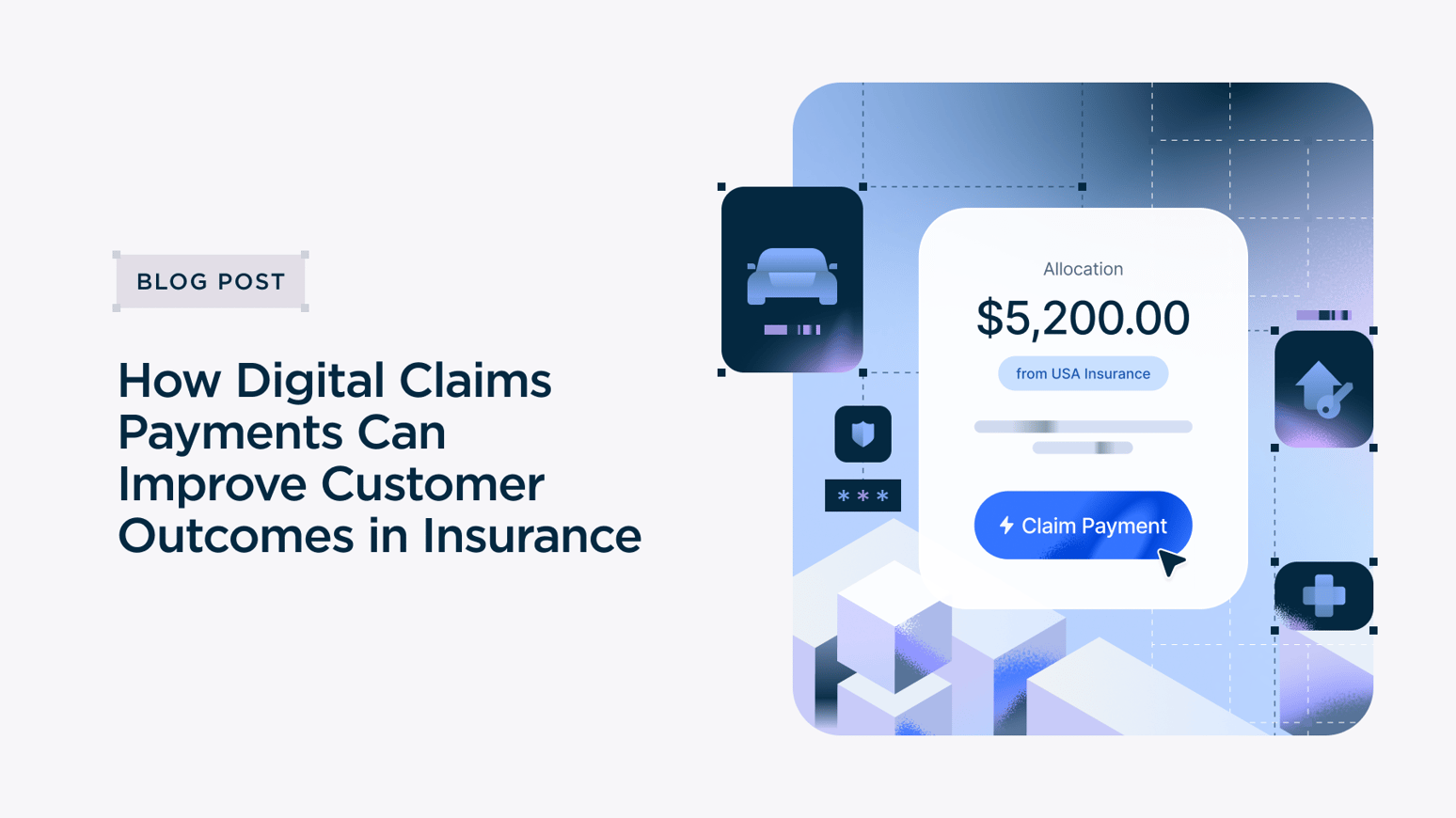
Modern payment solutions help insurers streamline the final stage of the claims lifecycle by replacing paper-based and fragmented payment processes with faster, more efficient digital disbursements. By offering multiple payment options and providing greater visibility into payment status, insurers can simplify settlement delivery while reducing operational complexity.
Security is equally important to the claims payment experience. Customers expect not only quick access to funds, but also confidence that payments are delivered safely and accurately. Secure payment workflows that incorporate recipient verification, authentication controls, and payment visibility can help insurers reduce fraud-related risks, minimise payment errors, and provide greater assurance that funds reach the intended recipient. These controls should be supported by clear explanations and assistance where customers encounter verification difficulties.
Transcard helps power the modernisation of insurance claim payments through a digital payment platform that enables insurers to deliver settlements across multiple payment methods within a single workflow. This approach helps reduce administrative burden, minimise manual intervention, and support straight-through processing, allowing organisations to manage claims payments more efficiently and at scale.
Benefits Beyond Faster Payments
The impact of payment modernisation extends well beyond speed. By creating a more transparent and efficient settlement experience, insurers can improve both customer satisfaction and operational performance with:
• Faster access to claim settlement funds
• Greater transparency throughout the payment process
• Reduced payment-related inquiries and complaints
• Higher first-time payment success rates
• Lower administrative burden for claims teams
The value becomes even more significant when supporting vulnerable customers. The FCA’s guidance emphasises the importance of identifying and responding to customers' individual needs, delivering tailored support, and ensuring good outcomes for those in vulnerable situations. Accessible communications, suitable payment options and an effective route to assistance can reduce uncertainty, particularly for customers with limited digital confidence, disabilities or language barriers. A digital journey should not leave customers unable to access an agreed settlement because they cannot complete the standard process.
Supporting Consumer Duty Through Better Payment Experiences
Consumer Duty is not simply a compliance initiative. It is an opportunity for insurers to rethink how they deliver value at every stage of the customer journey.
Claims payments are an important part of the overall customer experience and a meaningful reflection of operational performance. The FCA’s outcomes-monitoring findings reinforce the need to evidence results. Monitoring settlement-to-receipt times, failed or unclaimed payments, complaints and outcomes for customers needing additional support can help insurers identify problems, address their causes and check that improvements work.
As claims automation, artificial intelligence, and digital customer experiences reshape the insurance industry, payment modernisation should be viewed as a core component of that transformation. An automated claims process still falls short if customers are left waiting for funds or lack visibility into when payment will arrive.
Ultimately, Consumer Duty is about ensuring customers receive value, support, and fair outcomes throughout their interactions with financial services providers. By connecting modern payment capabilities directly to the claims process, insurers can create a more seamless experience from claim submission through final settlement, delivering better outcomes when policyholders need support most.

FAQs
What is the FCA’s Consumer Duty?
The Consumer Duty is an FCA framework of rules requiring firms conducting in-scope retail business, including insurers to act to deliver good outcomes for retail customers across four areas: products and services, price and value, consumer understanding, and consumer support.
It requires firms to assess and evidence customer outcomes alongside meeting their other regulatory obligations.
Does the Consumer Duty apply to insurance claims payments?
Yes — for insurance business within its scope, the Duty extends to the claims journey, including payment of agreed settlements. Payment arrangements should support consumer understanding and provide effective support without unreasonable barriers. A slow or inflexible payout process may cause foreseeable harm and itself be treated as a poor customer outcome, even if the claims decision was fair
What counts as a “good outcome” for a claims payment under Consumer Duty?
A good outcome includes the customer receiving their funds promptly and securely, through a suitable method that works for them, with clear visibility into when payment will arrive. Firms are expected to measure this with concrete metrics — payment speed, complaint volume, and first-time payment success rate — rather than relying on anecdotal assurance.
How can insurers demonstrate Consumer Duty compliance in claims handling?
Insurers can evidence compliance by tracking and reporting customer outcomes — payment timeliness, complaint trends, and customer satisfaction — to their boards and governing bodies. Payment technology that captures this data automatically makes ongoing evidencing far less burdensome than manual tracking.
What role does payment technology play in Consumer Duty compliance?
Payment technology can improve payment visibility and turns claims disbursement into a measurable, auditable process rather than a manual one, giving insurers the operational data regulators expect to see. It also can enable suitable payment choices and clearer communications, supporting the Duty’s consumer support and consumer understanding outcomes. Its effectiveness depends on how it is configured, supported and monitored.
How does Transcard support insurers’ Consumer Duty compliance for claims payments?
Transcard enables insurers to manage claims payments across multiple available payment methods within a single workflow, supporting payment choice, visibility and operational efficiency. These capabilities can help insurers deliver and assess customer outcomes as part of their wider Consumer Duty arrangements.